Search here
 Log In
United States Of America
UNITED STATES OF AMERICA
The United States of America, commonly referred to as the United States (U.S.) or America, is a federal republic composed of 50 states, a federal district, five major self-governing territories, and various possessions. The United States is a highly developed country, with the world’s largest economy by nominal GDP. It ranks highly in several measures of socioeconomic performance, including average wage, human development, per capita GDP, and productivity per person. While the U.S. economy is considered postindustrial, characterized by the dominance of services and knowledge economy, the manufacturing sector remains the second-largest in the world. Though its population is only 4.3% of the world total, the United States accounts for nearly a quarter of world GDP and over a third of global military spending, making it the world’s foremost economic and military power. The United States is a prominent political and cultural force internationally, and a leader in scientific research and technological innovations
WHY INVEST IN THE UNITED STATES?
There is no shortage of reasons why investors choose the United States – from the business-friendly environment and quality of life considerations to specific technology, supply chain, infrastructure and workforce factors. The nation’s diversity and openness are what truly allow businesses from all countries and industries to find their place in the market – and thrive.

FIRST CHOICE FOR INVESTORS
Businesses investing in the United States, regardless of industry, gain competitive advantages from one of the most open markets on the planet.
World’s Largest Market
The United States offers the largest consumer market on earth with a GDP of $18 trillion and 325 million people. Household spending is the highest in the world, accounting for over a quarter of global household consumption. At the same time, free trade agreements with 20 other countries provide enhanced access to hundreds of millions of additional consumers – and the United States continues to work with foreign partners to increase opportunities for U.S. exporters.
Nexus of Innovation
The United States is a recognized leader in research and development (R&D), and registers more international patents than any other country. Today’s innovators are safeguarded by a robust intellectual property protection framework, while the innovators of tomorrow are nurtured at leading universities and incubators across the nation. Companies of all sizes help make innovation in the United States a global enterprise, benefiting from – and contributing to – a flourishing ecosystem for invention and inspiration.
Ease of Doing Business
The United States is consistently ranked among the best internationally for its overall competitiveness and ease of doing business. Backed by a regulatory environment that is particularly conducive to starting and operating a business, U.S. business culture encourages free enterprise and competition. As a stable with a transparent and predictable legal system, all companies – regardless of national origin – compete on an even playing field democracy with a transparent and predictable legal system, all companies – regardless of national origin – compete on an even playing field.
Workforce Talent
The U.S. workforce is diverse, skilled, innovative and mobile – and U.S. workers are among the most productive in the world. Looking to the future, the United States has prioritized collaborative mechanisms with public and private-sector organizations to ensure that the workforce is able to meet the needs of a 21st century economy.
Abundant Resources
As the third largest nation by geography, the United States is home to vast and varied landscapes with abundant natural resources – including petroleum and natural gas. These diverse regions are connected by an expansive infrastructure network and services that help companies efficiently produce and move their products.
Access to Capital
The United States hosts the most developed, liquid, flexible, and efficient financial markets in the world. A wide range of funding sources – from banks and investment firms to venture capitalists and angel investors – enable innovation and expansion, giving companies in the United States an important advantage.
BENEFIT OF FOREIGN DIRECT INVESTMENT (FDI)
Foreign direct investment (FDI) plays an essential role in ensuring U.S. economic growth and prosperity -- creating high-paying jobs, spurring innovation, and driving exports.
- Capital: US$3.1 trillion Total FDI stock in the United States in 2015 (cumulative FDI snapshot taken at yearend)
- US$348 billion: Total FDI flows in the United States in 2015 (FDI measured over a specific period of time)
- Innovation: US$57 billion Research and development spending in a single year by U.S. affiliates of majority foreign-owned firms
- 51%* Percentage of U.S. utility patents filed from foreign sources in 2015

JOBS
- 6.4 million: U.S. workers employed by U.S. affiliates of foreign-owned firms
- 2 million: Number of U.S. workers employed in manufacturing jobs with foreign-owned firms in 2013
- 5.9 million: Additional jobs attributable to sourcing, increased incomes, productivity gains, and other economic effects of foreign-owned firms in 2013
- US$80,041: Average yearly compensation of U.S. workers at foreign-owned firms; high-skilled jobs that pay 30% higher than economy-wide average
U.S. Exports
- US$425 billion: U.S. goods exports by majority foreign-owned firms – more than one-fourth (26%) of all U.S. goods exports
- U.S. Taxes: 16% Portion of U.S. federal corporate income taxes paid by foreign-owned companies in 2013
ENERGY
America is in the midst of an energy renaissance. Thanks to technological advancements in drilling and hydraulic fracturing of shale formations, oil and gas production has increased dramatically. The industry’s three-year growth between 2010 and 2013 reached 168%.
As a result of this energy boom, the United States has ousted both Saudi Arabia and Russia as the world’s biggest oil producer and surpassed the latter as the world’s largest natural gas producer. The U.S. also has more wind energy powering its grid than any other global nation and is making strides in solar power technology.
The explosion in shale oil production has been instrumental in aiding the nation’s recovery, bringing both economic and wage growth to the country. In 2012, the sector introduced 2.1 million new jobs. Consumer wallets have also been affected, with the average household disposable income increasing by $1,200. Currently, the U.S. invests a record $200 billion in oil and gas and is moving towards reversing the decades-old ban on crude exports.
Though the recent drop in oil prices has put a dent in oil companies’ exploration budgets, on the macro level cheaper oil is likely a net benefit for the economy.

MANUFACTURING
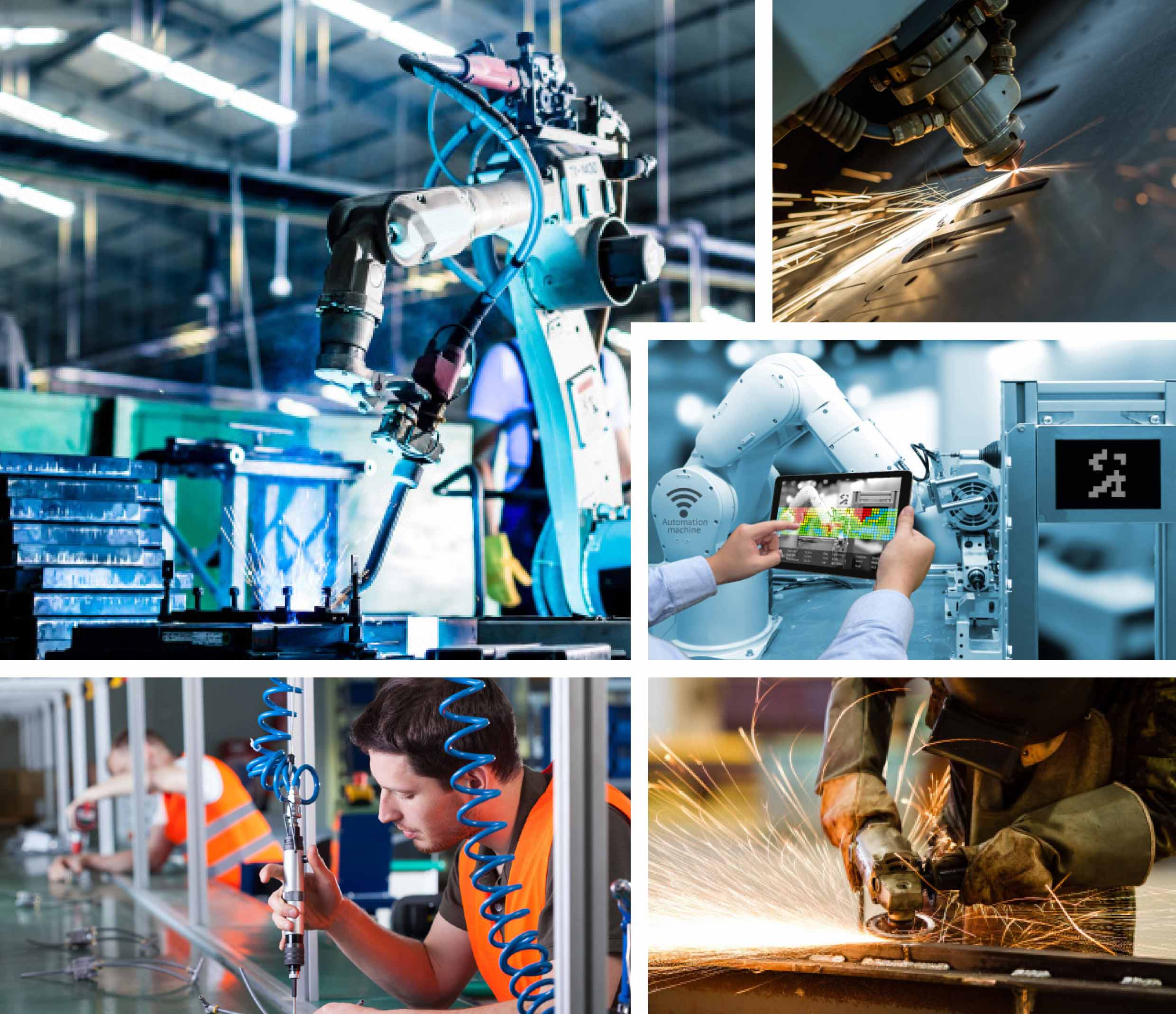
Manufacturers contribute $2.09 trillion directly to the economy, an increase from $1.73 trillion in 2009. The sector accounts for 12% of the GDP and supports 17.6 million U.S. jobs. The industry is expanding, meaning there is an increase in output. The energy sector’s growth has directly impacted that of manufacturing. Fracking has created a boom in manufacturing jobs and the cheaper gas prices have made manufacturing more competitive. It is estimated that 4.2% of all manufacturing jobs in 2025 will be linked to the United States’ current oil and natural gas surge.
TRANSPORTATION
Not surprisingly, growth in manufacturing has led to an enhancement of the logistics and transportation sector. Private companies in the general-freight trucking sector have showed continued sales and profit growth since 2010. As a general indicator of national freight transport, gains in the trucking industry show a greater demand for domestic shipments.
Mass transit has seen record ridership as gas prices continue to plummet. Transit ridership has risen almost 40% since 1995, and buses, trains and subways were used by more Americans in 2013 than in any year since 1956. As the economy improved, transit agencies upgraded services as more people utilized the systems to get to an increasing number of jobs.
Spending in the industry, which includes air, freight, maritime and trucking services, totaled $1.33 trillion in 2012, representing 8.5% of the annual GDP.

HEALTHCARE
At the end of 2013, the healthcare industry enjoyed a 135% three-year growth rate and brought in $21.8 billion, making it one of the fastest-growing industries. Thanks to an aging population and rising incidence of chronic diseases, the sector continues to grow and is indeed growing faster than the rest of the market.
Increased access to healthcare and technological advancements has also become a widespread trend. As a result, healthcare spending as a percentage of the nation’s GDP boosted to 17.4% in 2014.
Investor interest in healthcare and biotech stocks was huge last year, and the healthcare sector dominated the IPO market. Of the 288 IPOs registered in 2014, nearly 40% of those were healthcare-related. Healthcare stock growth has proven strong and also safe during turbulent economic times.

AGRICULTURE
The agriculture sector was one of few to fare well during both the recession and recovery, and promise for the industry still remains. The industry has been bolstered by exports as the global demand for agricultural products continues to surge. Last year the United States exported a record $152.5 billion worth of agricultural goods, up from $141 billion in 2013. Exports have also scaled 41% in value over the past five years.
In 2013, 16.9 million jobs, including those on farms and in the areas of forestry and fishing, were attributed to the agriculture sector. This accounted for 9.2% of total U.S. employment. Employment in agriculture-related industries supported an additional 15.6 million jobs.

Thanks to technological advances in the industry, low farm unemployment and investment in agricultural infrastructure, the sector is likely to continue strengthening the U.S. economy.