Search here
 Log In
Pakistan’s Meat Export Industry: Bite Into The Real Deal
The Pakistani meat export industry is at best 12 – 15 years old. There are about a dozen significant meat exporters mostly based in Lahore and Karachi exporting about 40,000 MT of Red Meat annually to around a dozen countries. The livestock is sourced mainly from around a dozen Livestock Markets based in Punjab and Sindh. The main government authorities concerned with the trade are the Ministry of National Food Security which is supposed to inspect and certify each piece of Meat that is exported; and the Trade Development Authority of Pakistan which is mandated to support the industry through trade linkages and market access. There has been some marketing, advocacy and certification support by International Donor Projects with a few more in the pipeline; the impact of which are yet to be ascertained.
At the sourcing; while there are regular large farming operations catering to the demand of large and small livestock for the annual Muslim sacrificial event of Eid-Ul-Azha, there are only a handful of operations to cater to the regular domestic or export meat market. This is mainly due to the high cost of production of livestock and further exasperated by the lack of experience in growing livestock for meat as a business. Most of the sourcing is from the main Livestock Markets where Small Rural Households supply their annual couple of animals through a long series of middlemen to the main markets.
The enabling environment has not lead to more livestock growth operations nor a disease free status. Preferential credit, skilled personnel, an active market opening strategy and standards are still to be embedded in the industry ecosystem. While the Punjab Government has seen some lawmaking e.g. the Livestock Breeding act, and the Markets Act; products of multi lateral efforts, the impact on the ground is yet to be seen.
Access to Markets
The main Red Meat Customers of Pakistan are Saudi Arabia, UAE, Vietnam, Kuwait, Qatar, Oman, Bahrain and Iran with whom trade is now slowing down due to security of payments. Pakistan has saturated the market segments in which it trades in all these countries except Vietnam; which will probably be the only source of major growth for 2014-2015.
Three of the largest Meat Exporting Countries, Australia, India and Brazil have access to 48, 38 and 84 markets respectively. Pakistan is exporting only to 12. If Pakistan needs to sustain the growth rate of 30%; It must either sell more to the same customers in the product categories they are in, venture into other product segments in the same markets, or seek out new markets i.e. markets must open for Pakistan.
Access to markets is dependent on a number of factors which includes the exporting country’s Disease Free Status, the efficiency and effort put in by the exporting country’s government to sign bilateral(s) for market access, and business development, lobbying, market understanding and resource pooling of the exporters themselves.
Government’s Role
Government’s role would involve active engagement with the current players in the industry and spearhead communication and effort with the authorities of the importing governments to enable market access for Pakistani Meat.
Much of the $59 Billion Meat Export Market is blocked off on account of Pakistan not having the Livestock Disease Free Status. No Matter how much the government lobbies, or communicates and negotiates with the importing countries; there will be no progress until there is a national wide sustainable program to monitor and eradicate Livestock Disease. There is high probability of this eventuality showing face in the recent ongoing efforts by the government in opening up food trade with Russia. The rapid movement of Livestock between provinces coupled with the extreme fragmented nature of our Livestock Production Systems makes disease eradication a herculean task but quite manageable if the Government commits to it. On the other hand however, India with the same Production Systems as Pakistan has market access to over three dozen countries.
It would do well for Pakistan to effectively aim for the markets that India has access to especially countries like Malaysia, Thailand, Egypt, Jordan, Algeria, Philippines, Angola, Iraq, Azerbaijan, Georgia and others. The list goes on.
Lukewarm efforts may yield results now and then; but unless there’s a medium-long term strategy to improve access by the stakeholders; Pakistan will surely remain in the bottom rung of the World Meat Trade despite boasting one of the largest Livestock Herds in the world.
Pakistan’s market share is currently 0.16% of the world meat trade.
Private Sector Contribution to the Growth
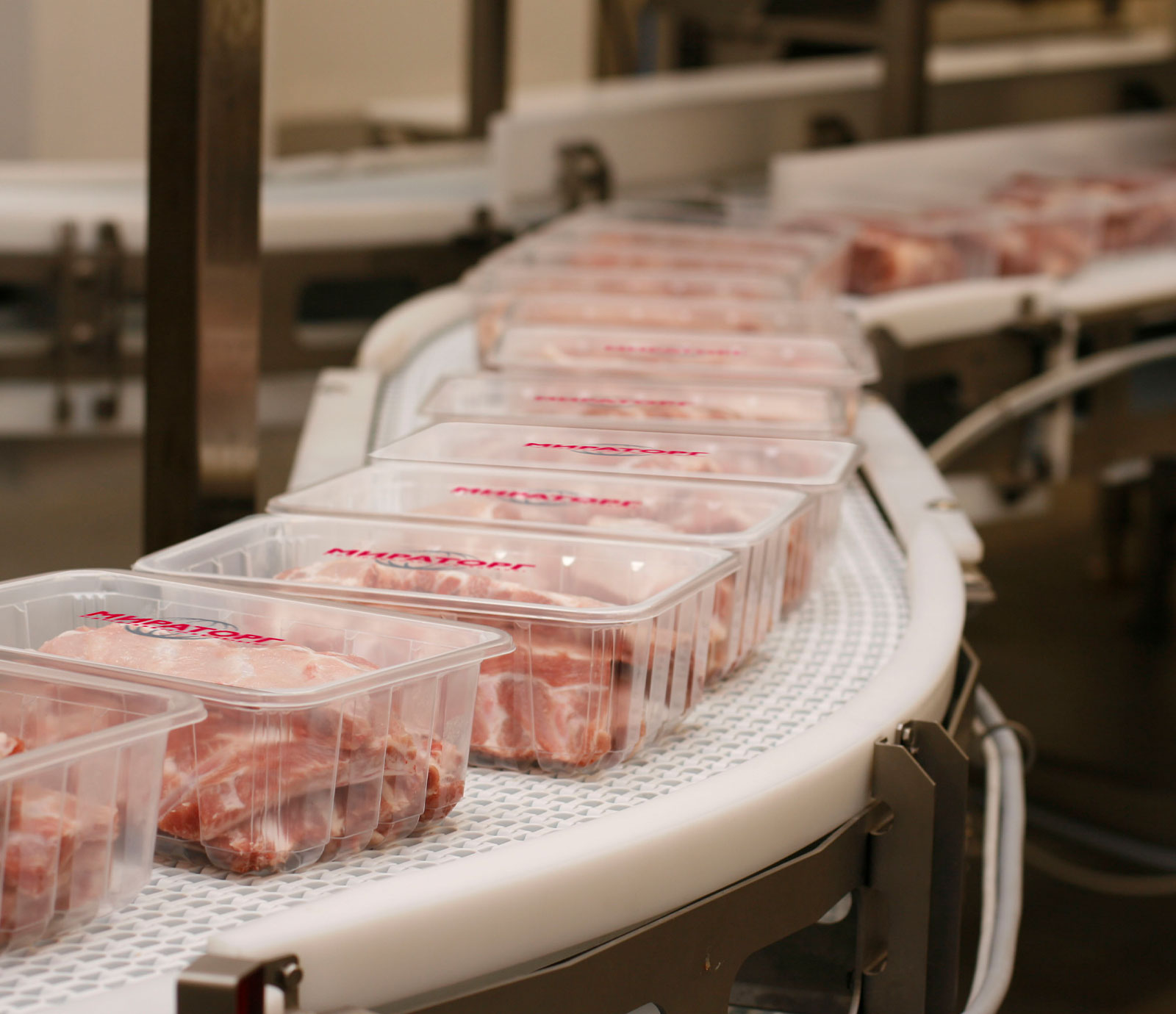
The high growth is mainly attributable to the businesses which ventured into unchartered territory and invested in high quality abattoirs. Some of the abattoirs have been imported from Europe to enable the facilities to comply with and product products that conform to international standards. As this article is being written, there are new setups in the pipeline with capacity upgrades in the existing abattoirs to cater to the Vietnam growth of Frozen Boneless Beef. The access to credit for many of these exporters isn’t much of a problem due to the relatively large size of some of the investors themselves and their business histories.
Their affinity to attach more investment and expand will be high if they see real gains in Market Access leading to more opportunity to export. The exporters already take on high risk by setting up export units in a limited market access environment and exporting at open credit to the GCC and bad debts are a phenomenon experienced by almost all major exporters. The Vietnam Sector though, is a relatively safer channel in terms of payments.
However, even now, much of the slaughtering and processing capacity remains unutilized due to the slow growth in the opening of the markets and the somewhat inability to target other market segments.
Market Segments
There are two main broad meats market segments state wise; frozen and chilled. The chilled segment is further segmented into chilled whole carcasses and chilled cuts as-is or vacuum packed. Pakistan commands a significant portion of the chilled whole carcasses segments in the countries to which it regularly exports to but is almost non-existent in the other segments. This may seem impressive but the segment in which Pakistan leads by far is only about 5-10% of the total market.
Case in Point – Saudi Arabia Meat Imports (Segments and Market Access)
Pakistan can export Meat to the Kingdom of Saudi Arabia. Though each exporting unit has to be facilitated by the Pakistani authorities to get it inspected and approved by the Saudi Food and Drug Authority; there are still some high quality units yet to be inspected so they can build on their investments and initiate trade with the Kingdom.
Saudi Arabia imported nearly $58 Million of Pakistani sourced meat in 2013 mainly in Beef and Lamb/Goat Chilled Carcasses. In these segments Pakistan had about 25% - 50% of the market share. However overall, Pakistan produces only 8% of the Red Meat Demand of $750 Million.
One major segment of the Saudi Market is that of Frozen Cuts of Beef worth around $360 Million catered mainly by India (60%) and Australia (35%). Pakistan is absent in these segments even though the quality and livestock production and health statuses are similar to India.
If the government can accelerate the inspection of the pending facilities using its reported good will with the Kingdom; and if the exporters can invest in the extra working capital and risk involved with selling specific cuts (the major demand segment) rather than whole carcasses; Pakistan can immediately enjoy some market share of the Frozen Market.
The share in the Beef Boneless Chilled segment, worth around $114 Million too can be increased if Pakistani companies can invest in Vaccum Packing in their existing facilities alongwith the technical processes required to create the product.
Considering Pakistan’s geo strategic location, government patronage in a high speed vessel and a bilateral clearing mechanism for perishable goods can make the Pakistani Product more competitive and high quality at clearance.
The analysis can be done with any market but the bottom line will remain the same. Pakistan is sitting on a huge opportunity. Market Access and Segment Diversification has to take place to enable the Meat Export Industry to contribute to reducing Pakistan’s trade deficit.