Search here
 Log In
The Ambassador of Austria to Islamic Republic of Pakistan
Profile:
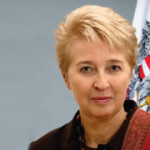
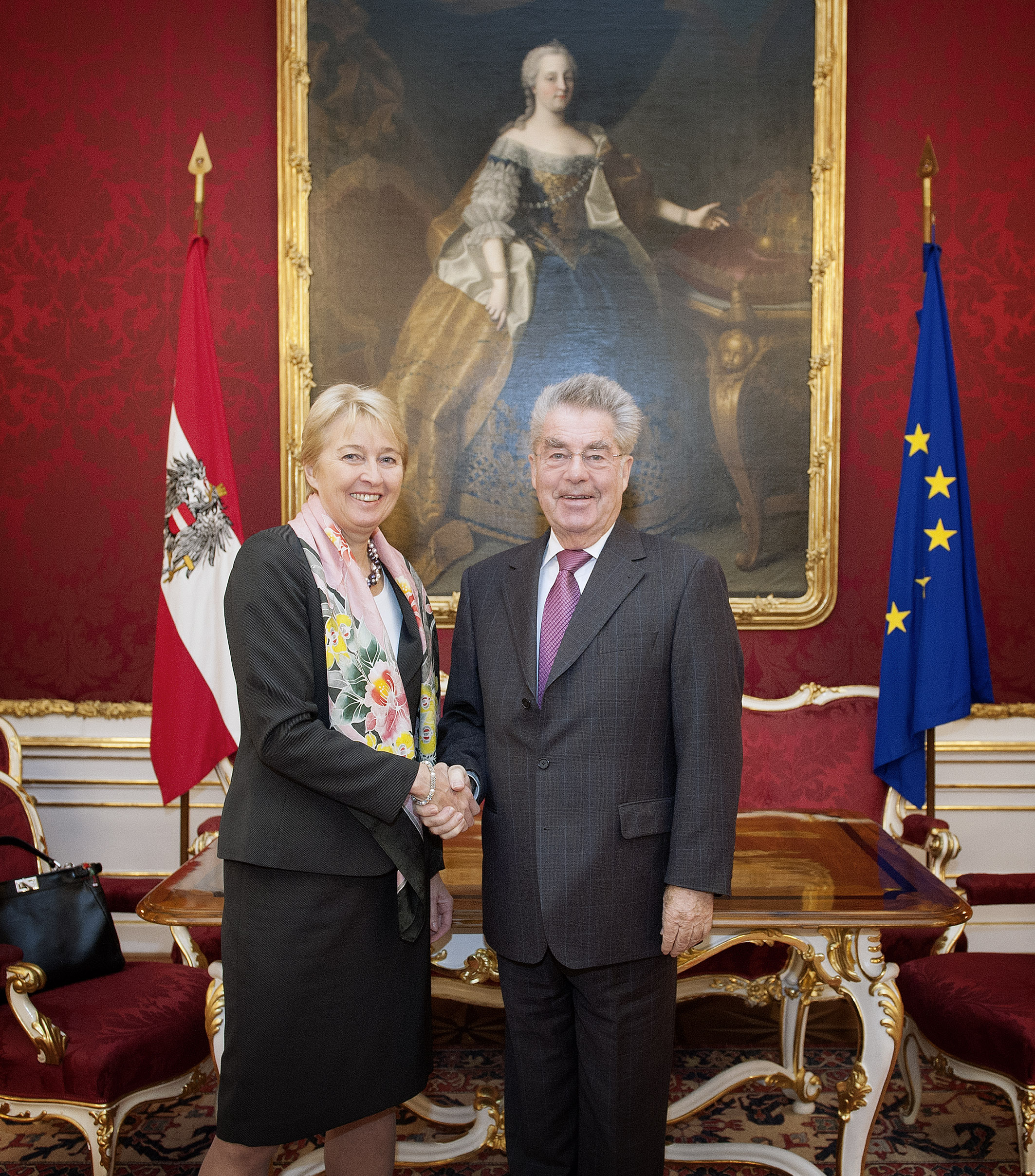
Her Excellency Dr. Brigitta Blaha, the ambassador of Austria in Pakistan holds a doctor’s degree. She also has studied Law at the University of Vienna. She joined the Austrian Foreign Service in April 1978. She has the honor to serve in all Departments of the Foreign Ministry incl. political, economic, legal and consular, protocol, culture and development cooperation. During her jubilant career she served in Federal Ministry for Foreign Affairs, Vienna (1978 - 1981), Austrian Embassy, Washington as First Secretary (1981 - 1983), Deputy Head of Mission, Austrian Embassy, Bangkok(1983 - 1985), again in Austrian Federal Ministry for Foreign Affairs, Vienna (1985 - 1991), Deputy Director, Austrian Cultural Institute, Rome (1991 - 1994), Head of Cultural Section, Austrian Embassy, Tokyo (1994 - 1997), Federal Ministry for Foreign Affairs, Vienna (1997 - 2001), Consul General at Austrian Consulate General, Hong Kong (2001 – 2005), Consul General at Austrian Consulate General, New York, (2005 – 2009), Ministry for Europe, Integration and Foreign Affairs (2009 - 2014) :Head of Department IV.3 (Austrians Abroad, Citizenship Matters, Elections, Social and Health and Labor Issues) and Ambassador Extraordinary & Plenipotentiary of the Republic of Austria to the Islamic Republic of Pakistan (Since December 1,2014). She can communicate efficiently in German, English, French, Italian and Spanish languages.
Blurb:
Pakistan is an emerging market that has abundant resources and offers a cheap labor force which would present a good opportunity for Austrian businesses to invest. The establishment of a Trade Attaché representing the Chambers of Commerce of Pakistan in Vienna could facilitate promoting these opportunities.
Evolve: The Republic of Austria is the second richest country in Europe. Your country is with the lowest unemployment rate in Europe and also the one with the lowest youth unemployment rate…How you made this miracle happen?
Dr. Brigitta Blaha: Statistics vary but Austria does indeed enjoy a low unemployment rate and especially a low youth unemployment rate. The key to low unemployment is a mix of different initiatives and policies of the Austrian Government. The economy of Austria has been growing steadily and Austria has a strong and active labor market policy. One of the most important goals in the labor market policy has been the prevention of youth unemployment. Therefore, there is an apprenticeship program for young people guaranteeing them the possibility to pursue training if no vacant job position is available. Austria also follows a dual vocational system, whereby apprenticeship is accompanied by academic education. Since labor market policies and demands change rapidly in the 21st century, trainees quickly learn to meet the new demands.
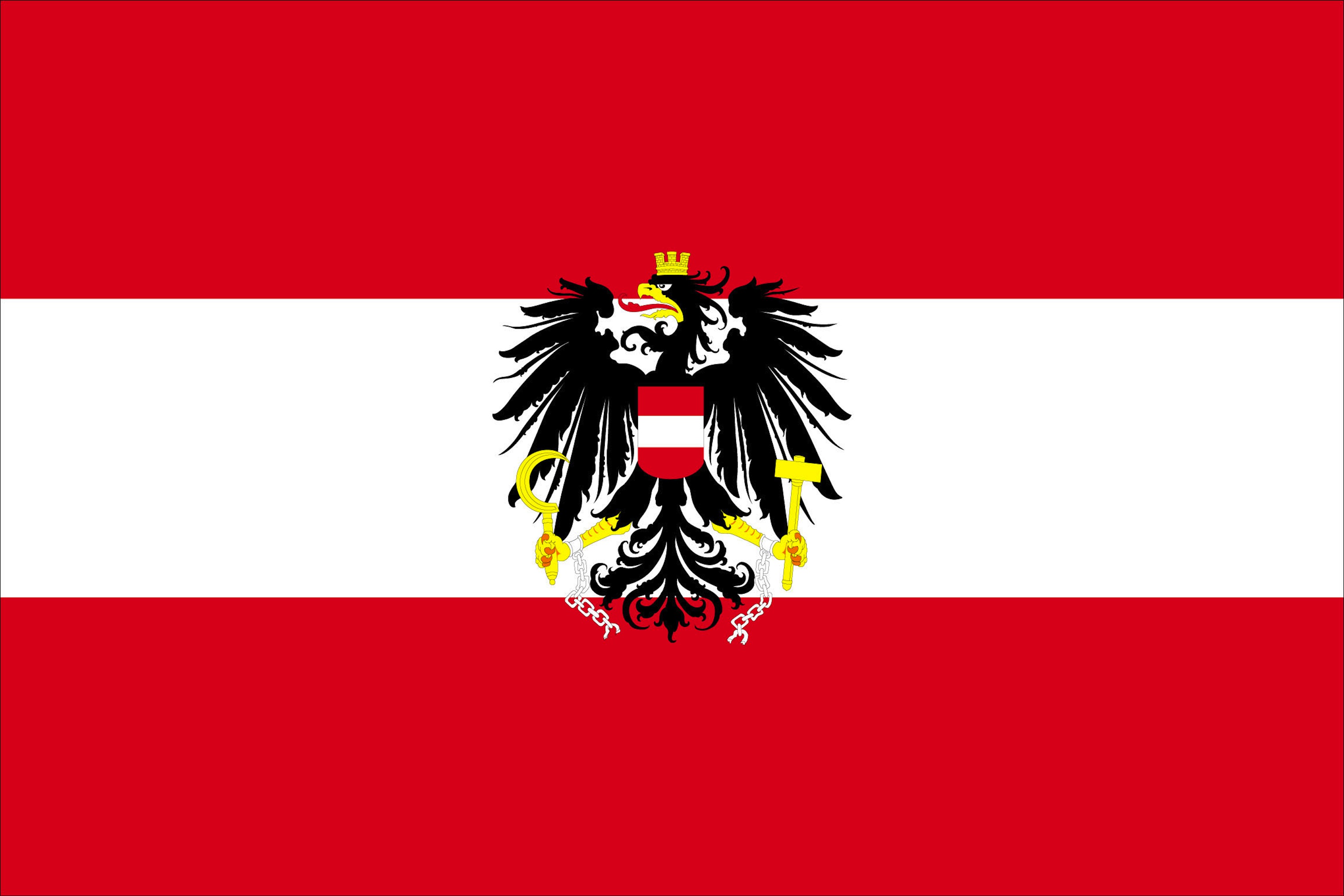
Evolve: Unlike most EU member states, Austria is not a member of NATO. How does this affect your work during times of international crisis when NATO is more active than the EU?
Dr. Brigitta Blaha: In order to gain full independence after the Second World War and ten years of occupation, Austria has opted for neutrality 60 years ago. This is actually what we are celebrating on our National Day. However, Austria always conducted an active policy of neutrality. It has joined the UN and various international organizations and became a member of the EU 20 years ago. It has also become one of the UN headquarters, next to New York, Geneva and Nairobi. Since 1994 Austria also participates in the NATO Partnership for Peace.
Evolve: Austria is well known for its scenery and cultural highlights. Is it also a good place to do business? Don’t you think that Austria is too expensive?
Dr. Brigitta Blaha: Investors benefit from Austria’s location as a hub between the EU and Eastern European Countries who are not members of the EU. Most major cities in the East of Europe have direct flight connections to Vienna. Within Europe, Vienna as a location of residence and establishment of companies has become cheaper than some other European countries. Austria is located in the heart of Europe and offers a high quality of living, highly skilled and innovative labor, a secure location, international schools, cultural activities and a healthy environment.
Evolve: Austria is said to be rather bureaucratic. Can companies be successful there?
Dr. Brigitta Blaha: The number of companies has doubled over the last ten years. In 2004 there were 22,000 exporters and now there are well over 45,000, also encouraged by an export promotion program of the Austrian Federal Economic Chamber and the Ministry of Economy. More and more companies establish their regional headquarters in Vienna for its business friendly attitude and support.
Evolve: In your view what are the priorities and key elements for cooperation between Austria and Pakistan?
Dr. Brigitta Blaha: Austria and Pakistan enjoy cordial political relations and both countries cooperate in various sectors. Priorities in the business sector are in energy (gas, hydro and renewable energies) and textiles. Other areas of cooperation are culture and post-graduate education/research.
Evolve: Austria is a global leader of environmental technologies and services. How Pakistani companies can be benefitted?
Dr. Brigitta Blaha: Investment in environmental technologies is usually linked to saving resources by employing low energy consumption machinery, emitting less pollutants and noise and being more efficient. This does not only benefit Pakistani companies, but the general public. Low air emissions, landfill and waste management lead to a cleaner environment, improve the health of the population and increase tourism (clean lakes, rivers, forests). Research and development of those technologies is an industry in itself, it leads to employment of highly skilled labor and boosts export industries that supply to countries with a high consciousness for quality and environment friendliness. Austria prioritizes sustainability and environmental-friendly energy and technology solutions. Austria has made big strides in wind and solar energy. A lot of emphasis is also given on recycling of goods. One such project, running very successfully is district heating in Vienna. A recycling plant is used to heat large parts of Vienna through heat produced from recycling garbage. Such projects could also be implemented in Pakistan in order to help tackle the energy crisis.
Evolve: In 2006 both countries agreed to develop a PakistaniAustrian technical University in Lahore. Due to changes in the Pakistani government the project was abandoned. Can you please share any future prospect for this project? Can collaborations of Pakistani universities with Austrian universities be expected in the future?
Dr. Brigitta Blaha: It is not realistic to revive this project at present. It is important to enhance and strengthen existing structures. A scholarship program, in existence since 2003, administered by the Austrian Exchange Service in cooperation with the Higher Education Commission, allows at present about 50 Pakistani students annually to pursue PhD programs in selected disciplines at Austrian universities. I recently hosted a reception for the alumni where I had the pleasure to meet many of the former students who are now mostly teaching or doing research in leading positions at Pakistani universities.
Evolve: Will you please share about the research promotion system of Austria for “entrepreneurs with promising ideas”: direct grants, tax advantages and other measures for assisting companies to make money by exploiting good ideas?
Dr. Brigitta Blaha: The Austrian “Wirtschaftsservice Gesellschaft mbH” is the Austrian federal promotional bank. It assists companies in the implementation of innovative projects by granting loans, awarding subsidies and issuing guarantees at favorable interest rates, particularly in cases, where companies cannot obtain the necessary funds from other sources of financing. In addition, it provides information, advisory and other services to upcoming, established and expanding companies.
Evolve: What initiatives are required to connect Pakistan and Austrian business community?
Dr. Brigitta Blaha: There is a need to organize more visits of trade delegations between the two countries. Pakistan is an emerging market that has abundant resources and offers a cheap labor force which would present a good opportunity for Austrian businesses to invest. The establishment of a Trade Attaché representing the Chambers of Commerce of Pakistan in Vienna could facilitate promoting these opportunities. Cultural dialogues and efforts to disseminate a more positive image of Pakistan would also help to enhance trade ties. The Austrian Trade Commission in Karachi establishes contacts between Austrian and Pakistani companies and public institutions. They do market and company research, organize meetings and events like trade missions, fact finding missions, Austrian pavilions at trade fairs and technical seminars. The office accompanies Austrian businesses to enter the local market with legal advice and helps with administrative, financial and intercultural issues. I would encourage Pakistani business people to visit the Austrian catalogue exhibitions in Karachi and meet Austrian Trade delegations when they come to Pakistan.
Evolve: You work hard as an ambassador, what do you do to relax. Do you have any hobbies?
Dr. Brigitta Blaha: In my spare time, I do sports, here in Islamabad mostly swimming, hiking and Yoga. I love culture, music, literature and fine arts. And I do love travelling and exploring new places.
Evolve: Message to readers
Dr. Brigitta Blaha: Pakistan is a wonderful country full of opportunities. Its great asset is its people. I have enjoyed their friendliness and generous hospitality. I hope that Pakistan will overcome the difficulties it faces and I will continue to work for the enhancement of relations between Pakistan and Austria in many different areas.